







How to Improve Memory: A Neuroscience-Backed Guide to Cognitive Longevity
Learn how memory works and explore science-backed nutrients that support brain health, mental clarity, and cognitive performance.

Sorry, looks like we don't have enough of this product.


Many people search for ways to improve their mood when experiencing anxiety or feeling low. Mood fluctuations are common across all age groups, from children navigating attention challenges to teens balancing academic pressure and adults managing daily stressors. For individuals seeking natural alternatives to medication, understanding mood from a physiological perspective is essential. Mood is not random. It reflects underlying processes in the brain and nervous system. Mental health connects directly to neurotransmitter balance, sleep quality, nutrient availability, stress hormone regulation, and cell metabolism. When these systems function optimally, emotional stability becomes more attainable. Understanding how to improve mood requires shifting from emotional suppression to biological support.
A more effective strategy focuses on supporting brain health rather than fighting uncomfortable feelings. Mood serves as a signal. Chronic stress elevates the stress hormone cortisol, disrupts neurotransmitter balance, and impairs brain function. Sleep deprivation and poor diet further contribute to emotional instability. When individuals reduce stress, improve nutrient intake, and prioritize nervous system regulation, they create the physiological conditions necessary for a positive mood. In this framework, mood improvement reflects restored biological balance.
Three neurotransmitters play a central role in mood regulation:
Serotonin supports emotional stability and sleep.
Dopamine levels influence motivation, attention, and reward.
GABA promotes relaxation and nervous system balance.
Imbalances in these systems may contribute to mild or moderate depression symptoms, anxiety, irritability, and cognitive challenges. Clinical studies published in the Journal of the American Academy of Child & Adolescent Psychiatry and the British Journal of Nutrition have linked nutrient status and stress exposure to altered neurotransmitter function.
It is important to differentiate between mild or moderate depression and more complex psychiatric conditions such as bipolar disorder. Persistent symptoms require evaluation by a doctor. Supplements and lifestyle changes may support brain chemistry, but do not replace professional medical care when medication is necessary. Understanding these neurotransmitter systems clarifies how to improve mood from a scientific perspective.
The requirement for mood enhancement is rooted in biochemistry. Modern life places significant demands on the brain. Inadequate diet, chronic stress, insufficient sleep, and digital overstimulation deplete essential nutrients. These nutritional deficiencies may contribute to decreased neurotransmitter production or efficient regulation. Targeted dietary supplements may provide the nutrients required for neurotransmitter synthesis and nervous system balance. Many people searching for these nutritional solutions also look for the best brain supplements to support their emotional state, overall cognitive performance, and long-term neural health. Supplements are tools within preventive medicine and may support resilience when used appropriately. Although many supplements are generally considered safe, individuals should follow proper dose guidelines and talk to a doctor before combining supplements with medications. The Food and Drug Administration (FDA) regulates supplements differently from prescription drugs, making informed use essential. Mood stability improves when the body adapts effectively.
Each neurotransmitter originates from an amino acid. Tryptophan converts into serotonin. Tyrosine contributes to dopamine production. Without sufficient protein intake, neurotransmitter synthesis may decline. Whole foods such as eggs, poultry, legumes, seeds, and fish provide critical amino acids. A balanced diet rich in diverse food sources supports optimal brain function and emotional regulation. Inadequate protein intake may impair the body’s ability to improve mood naturally.
Micronutrients play an important role in nervous system regulation.
Magnesium supports relaxation, nervous system signaling, and stress reduction. It may help reduce stress and stabilize anxiety levels.
According to the British Journal of Psychiatry, low vitamin D may be a contributing factor to depression. Adequate sunlight exposure and supplementation support mental health.
B vitamins contribute to cell metabolism and neurotransmitter production. Active forms of these vitamins enhance bioavailability and support brain chemistry. A healthy diet rich in vitamins strengthens emotional well-being, but many individuals still require supplementation.
The digestive system significantly influences mental health. A substantial portion of serotonin production occurs in the gut. A healthy diet including fiber-rich foods, chia seeds, fermented foods, and cold water fish supports gut microbial diversity. Chronic stress disrupts gut integrity and may contribute to mood instability. Gut health and brain health remain deeply connected.
Targeted mood supplements support physiological balance and cognitive resilience.
Accentrate® Minerals contains chelated magnesium, zinc, and iron to support neurotransmitter regulation for individuals under 110 lbs. Chelated minerals improve absorption and reduce gastrointestinal discomfort. These minerals support brain function and emotional well-being in children.
Place your order for Accentrate® Minerals today!
Formulated for teens and adults, Accentrate® Minerals 110 supports memory, attention, focus, and energy production. Magnesium, zinc, and iron support cognitive well being, zinc and iron do this by helping the brain maintain balanced dopamine levels.
Place your order for Accentrate® Minerals 110 today!
This bundle combines phospholipid EPA and DHA with chelated minerals to support attention, memory, and mood for those under 110 lbs. Scientific reviews from the National Center demonstrates the benefits of omega-3s for mental health. The minerals contained within help support the function of neurotransmitters for cognitive and emotional well-being. These fatty acids support cell membrane integrity and neurotransmitter signaling.
Place your order for Accentrate® Omega & Minerals Bundle today!
Designed for teens and adults over 110 lbs, this combination supports mood stability, focus, and cognitive clarity through Brain Ready™ Nutrition. Omega-3s and minerals support proper regulation of neurotransmitters for optimum cognition, including memory, attention, and focus, for individuals.
Place your order for Accentrate® Omega 110 & Minerals 110 Bundle today!
This comprehensive children’s bundle includes omega-3s, active-form vitamins, and chelated minerals. B vitamins support neurotransmitter balance and brain function.
Place your order for Accentrate® Omega, Neuro, & Minerals Bundle today!
Adults benefit from this advanced combination designed to reduce stress, support attention, and enhance mental energy.
Place your order for Accentrate® Omega 110, Neuro 110, & Minerals 110 Bundle today!
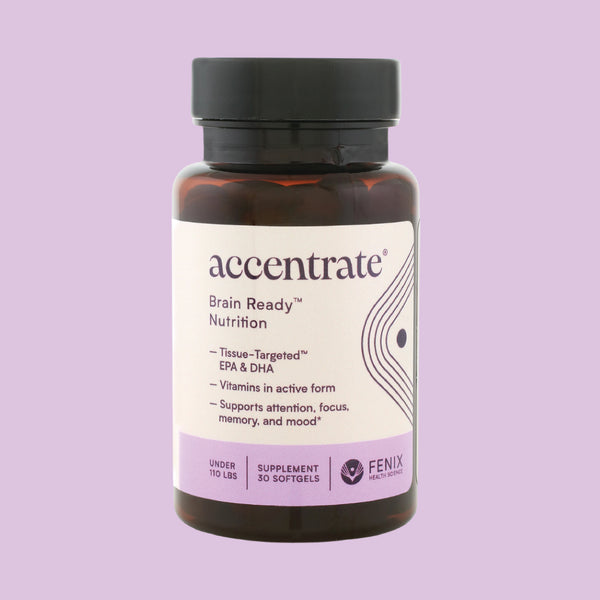
This formulation combines omega-3s and active vitamins with chelated minerals to support attention, focus, memory, and mood in children under 110 lbs.
Place your order for Accentrate® & Minerals Bundle today!
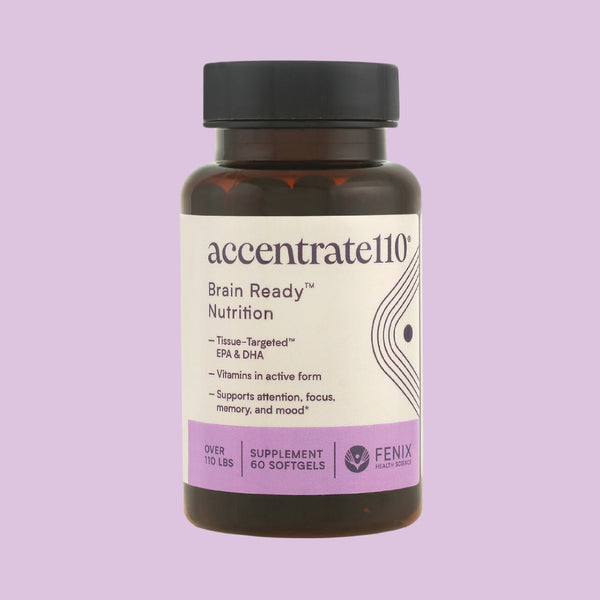
This adult bundle integrates omega-3s, active vitamins, and minerals to support sustained mood stability and cognitive performance.
Place your order for Accentrate110® & Minerals 110 Bundle today!
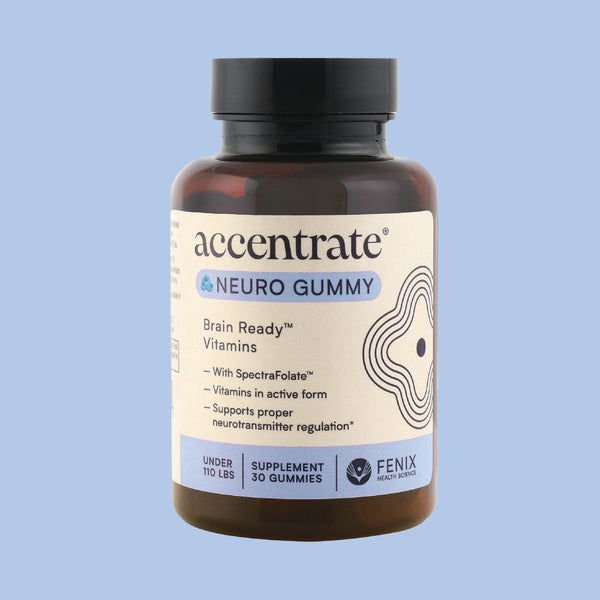
Featuring SpectraFolate™, this gummy provides bioavailable folate in a convenient format for children. It supports neurotransmitter regulation and mental health, especially helpful for those navigating anxiety or focus challenges.
Place your order for Accentrate® Omega, Neuro Gummy, & Minerals Bundle today!
Supplements function most effectively when combined with consistent lifestyle practices.
Regular sleep stabilizes cortisol and other stress hormone fluctuations. Deep sleep supports the brain’s natural metabolic waste clearance system, sometimes referred to as the glymphatic system. When sleep is insufficient, cognitive clarity and emotional balance may suffer, contributing to irritability and brain fog. Consistent sleep schedules and daily sunlight exposure support circadian alignment.
Continuous digital stimulation elevates dopamine activity and may contribute to anxiety levels. Limiting screen exposure and implementing structured lifestyle changes support nervous system recovery.
Exercise stimulates endorphin release and Brain-Derived Neurotrophic Factor (BDNF), supporting neuroplasticity. Regular physical activity enhances energy, reduces stress, and contributes to overall health and life satisfaction. Walking is one of the natural remedies that further reduces oxidative stress and supports a positive mood.
Meditation reduces amygdala reactivity involved in stress and fear responses. Deep breathing stimulates vagus nerve activity, promoting calm and relaxation. Gratitude practices shift attention toward positive experiences. Exposure to nature calms neural activity and supports emotional regulation.
Strong social bonds increase serotonin and buffer against stress. Meaningful relationships with a family member or supportive peer enhance emotional resilience and life satisfaction. Mood reflects both biological and social influences.
Learning how to improve mood requires consistent biological support rather than temporary emotional suppression. Small daily practices, such as a balanced diet, sufficient sleep, regular exercise, stress management, and strategic supplements, compound over time. Emotional stability reflects the health of the brain and body. With science-backed nutritional support and sustainable lifestyle habits, individuals can improve their mood naturally and strengthen long-term well-being.
Anglin, Rebecca E. S., et al. "Vitamin D Deficiency and Depression in Adults: Systematic Review and Meta-analysis." The British Journal of Psychiatry, vol. 202, no. 3, Mar. 2013, pp. 179-85.
Bloch, Michael H., and D. Allan Qawasmi. "Omega-3 Fatty Acid Supplementation for the Treatment of Children with Attention-Deficit/Hyperactivity Disorder Symptomatology: Systematic Review and Meta-Analysis." Journal of the American Academy of Child & Adolescent Psychiatry, vol. 50, no. 10, Oct. 2011, pp. 991-1000.
National Center for Complementary and Integrative Health. "Omega-3 Supplements: What You Need To Know." NCCIH, U.S. Department of Health and Human Services, 13 Feb. 2024.
These statements have not been evaluated by the Food and Drug Administration. This product is not intended to diagnose, treat, cure, or prevent any disease.
